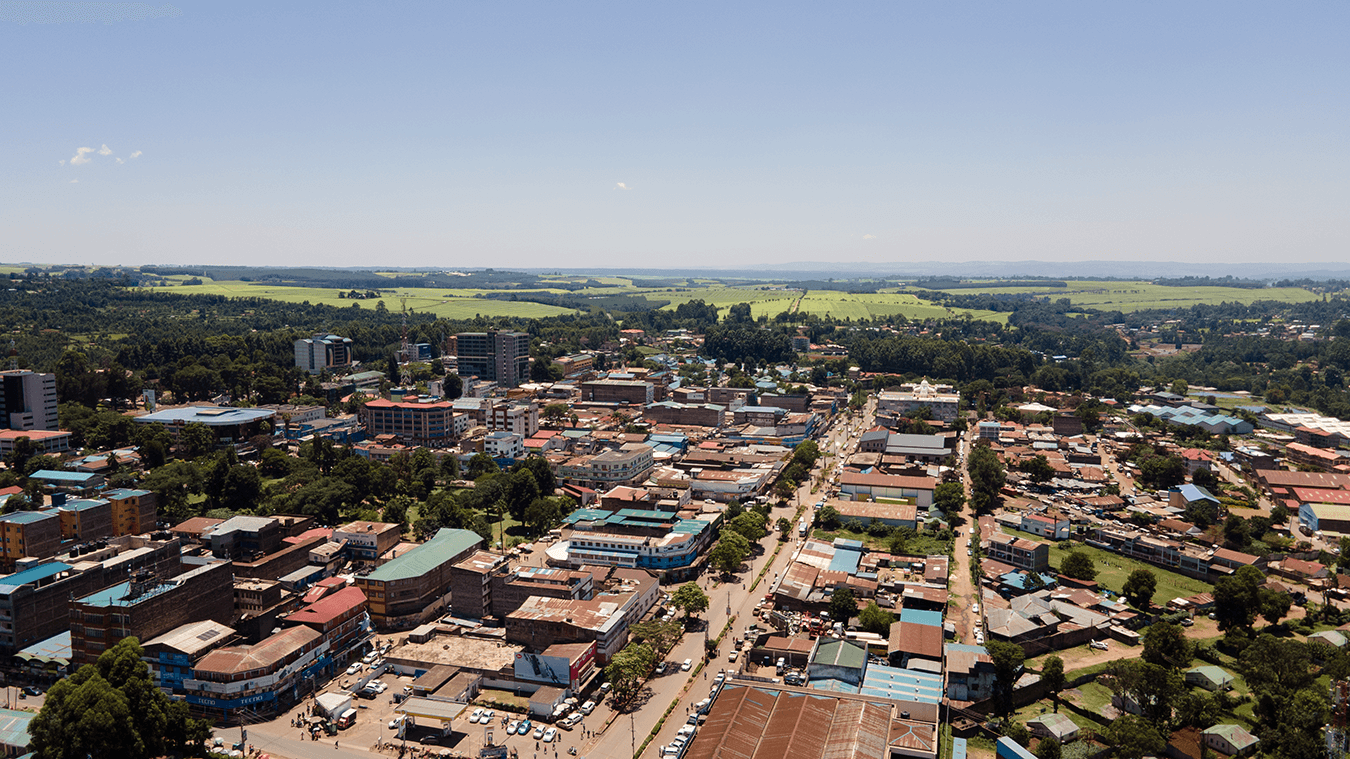
In the green highlands of Kericho, Kenya, cooking a daily meal is not a simple task. For many families in the rural communities surrounding the town, it means relying on firewood and open flames inside the home—an everyday reality that carries hidden health risks and long-term consequences. Today, we travel to Kericho to learn of one woman’s experience, exploring the larger story of energy access, indoor air pollution, and why clean cooking solutions matter.
Kericho is a large town about six hours from Kenya’s capital, Nairobi, and is in the heart of Kenya’s tea-growing region. Despite its large population, Kericho is subdivided into numerous small outlying villages and clusters of buildings where tea pickers and workers reside, thereby dispersing the town’s population and infrastructure.
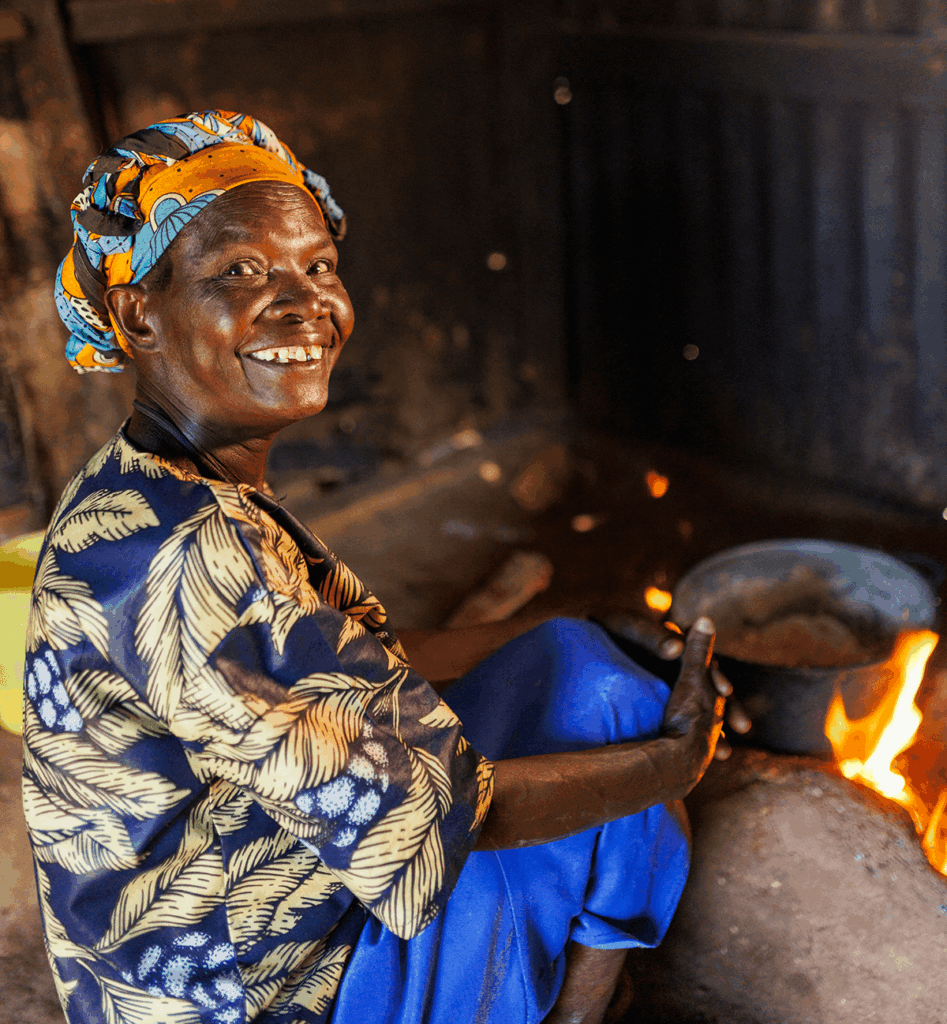
One of these rural clusters of buildings is home to Lina, a sixty-five-year-old woman with eight children and several grandchildren, many of whom live at home with her.
Every single day, Lina and her daughters live with difficulties that we can barely imagine. Cooking for her family is a long, arduous, and dangerous affair that requires Lina to collect firewood for her kitchen, a small, smoke-filled room where she cooks all her family’s food over an open flame.
“I find it hard fetching firewood. Carrying firewood is so difficult, especially a huge load…I feel pain in my waist sometimes. I have really become so tired.”
Consider everything you ate today; imagine cooking it over an unpredictable, smoky flame like this. Not because you’re camping, or because you want to, but because you have no better option.
While visiting the region, BHLF Executive Director, Anne asked her colleague, Brian, to see for himself what that smoky room was like. He was in the room for just 45 seconds, and this is what he said, “I was in there just a few minutes, and it’s amazing. My eyes are just burning. My throat, scratchiness, my lungs—just in a few minutes. It’s incredible. [clears throat] I don’t know how those women do this every day, you know, day after day”.
Lina and her daughters spend hours every day in an environment like that, and they aren’t alone. An estimated 2.1 billion people today live in energy poverty so severe that they are forced to burn wood or charcoal to cook food. Those women are the reason Anne took up work with BHLF.
“I started to think that as a midwife, possibly the best thing I could do for these women, more important than taking their blood pressure and listening to the baby’s heart rate and all of that, the most important thing I could do for them is to find them a way to cook that wasn’t in these horribly smoky polluted environments.” —Anne Hyre
Air Pollution and Health
Indoor air pollution from cooking kills upwards of 3 million people every single year, more than HIV, tuberculosis, malaria, and cholera combined, with only a fraction of the international attention. Cooking in this manner also emits substantial amounts of CO2 and contributes to deforestation. While energy poverty is too large an issue to be remedied in a short period, this aspect of sub-Saharan energy poverty can be addressed with only existing propane technology.
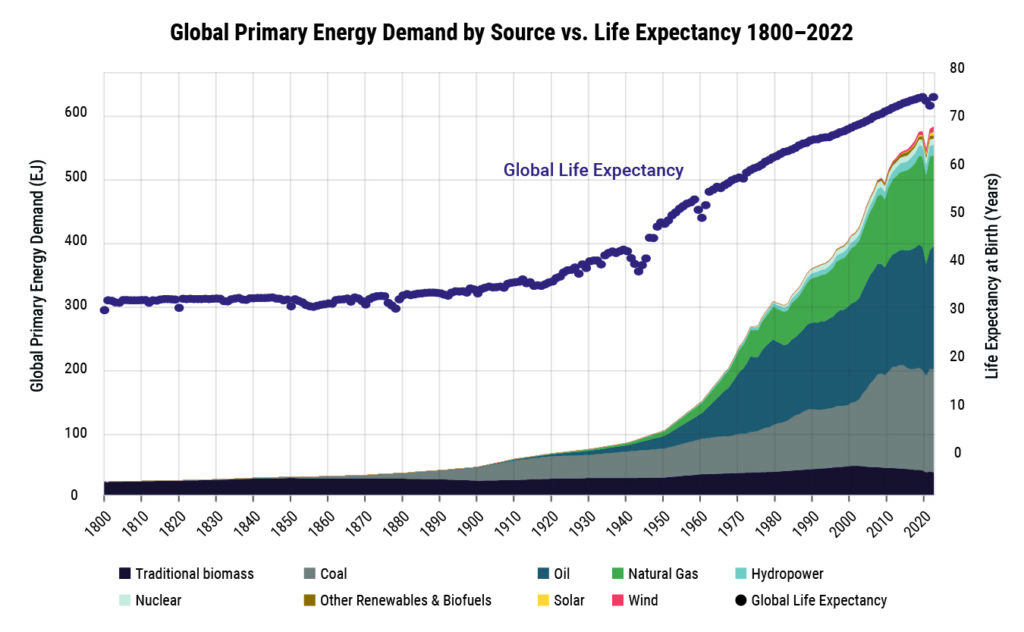
Energy, and the lack thereof, is directly correlated with public health. Life expectancy, the simplest indicator of public health, remained around a stable 33 years for over a century, while the primary energy source was what Lina uses today: burning wood, charcoal, and biomass. Only after fuels such as coal, oil, and natural gas, along with other energy sources, were widely adopted did we observe a substantial increase in global life expectancy.
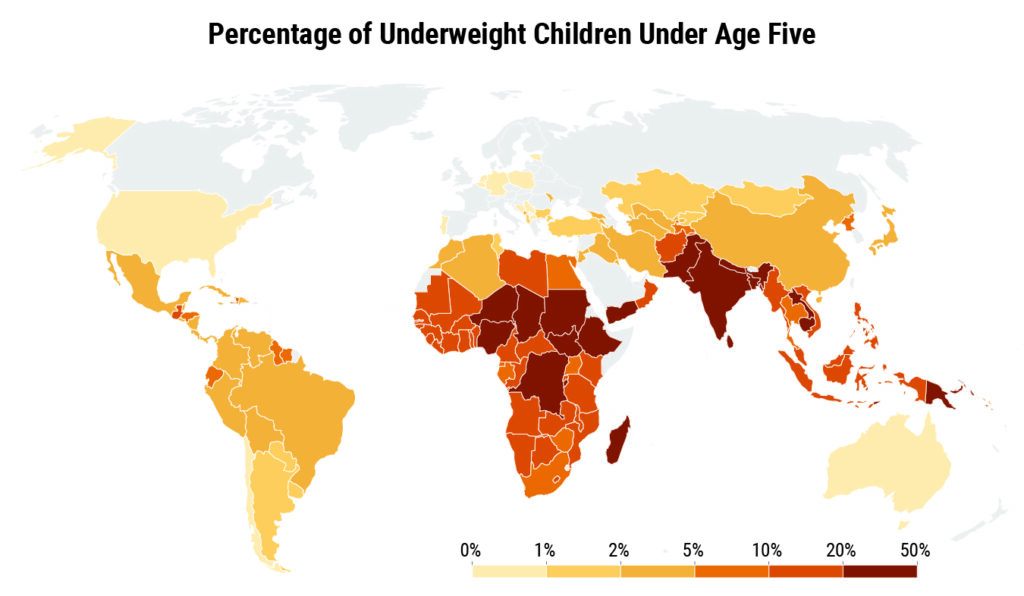
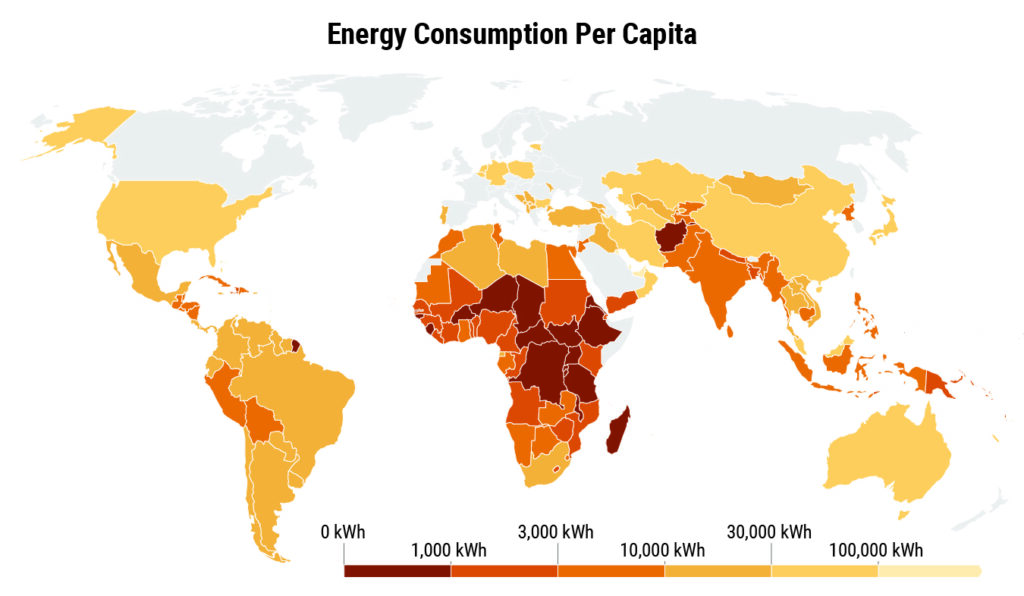
We see a direct correlation between energy consumption and both positive quality of life and health outcomes. Energy is inextricably linked to modern life and advancements. Understanding the differences in outcomes and why clean cooking methods are scarce for Lina requires an understanding of Kenya’s energy makeup compared with that of the U.S.
Energy in Kenya vs. The U.S.
Energy consumption in the U.S. is dominated, as in almost every highly energy-intensive nation, by petroleum and natural gas, along with a small share of coal, nuclear, and renewables. For cooking and heating, Americans rely primarily on natural gas.
Kenya, by contrast, is a low-energized nation, and much of its energy still comes from traditional biomass, as reflected in Lina’s cooking.
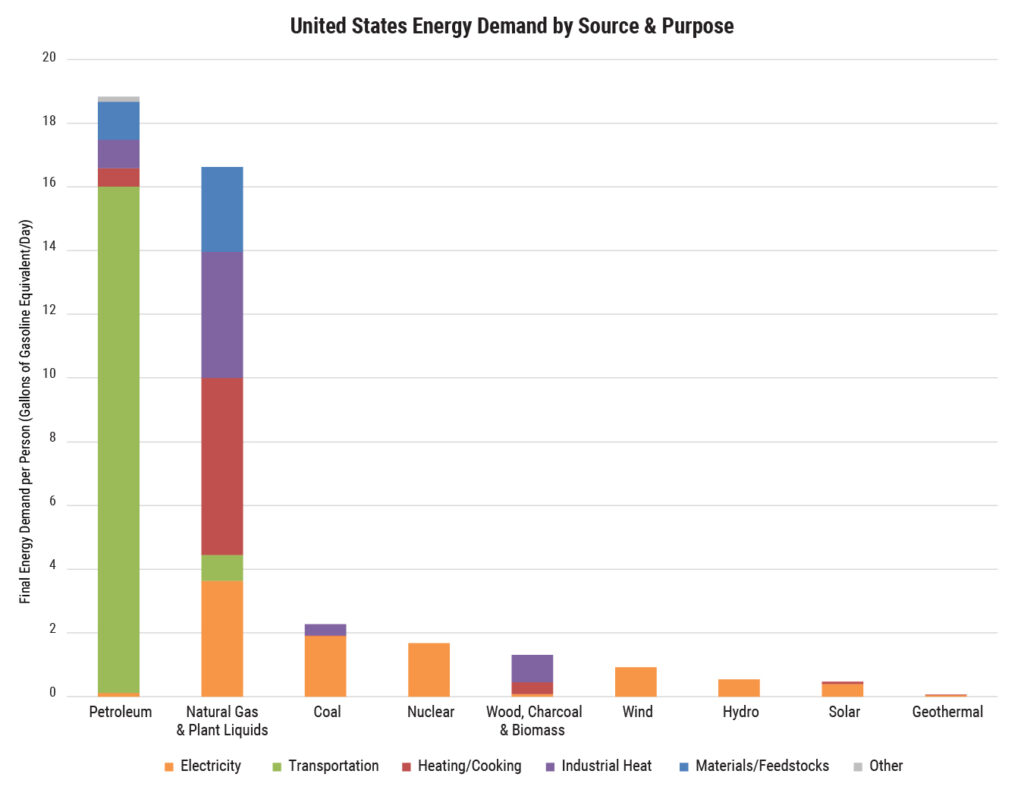
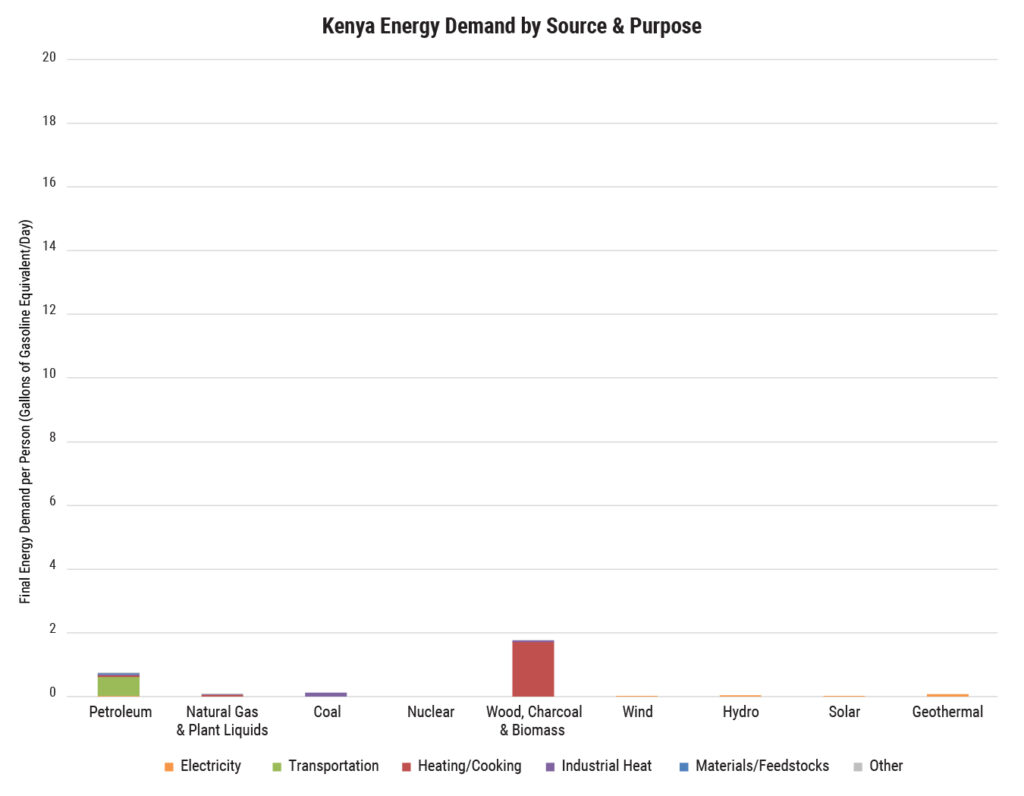
Kenyan infrastructure provides Lina with enough electricity per day to power a lightbulb and charge a cell phone, but not nearly enough to power the life-changing kitchen appliances we take for granted in highly energized nations. What Lina needs is easy access to abundant energy and the opportunities it affords; however, Kenya remains decades away from achieving this. A demonstrable improvement in Lina’s life today, given current technology, is access to a propane cooktop and cylinder.
I had no idea what a life-transforming fuel propane can be. Something just as simple as that. It’s something that you can light immediately. It burns cleanly. It saves women the time of having to go and collect the fuel and the kids. And it protects the environment.
– Anne Hyre
The widespread adoption of propane as a cooking fuel is one of the most impactful and achievable ways to address the harms of energy poverty now. Both the Kenyan and Ghanaian governments acknowledge the importance of propane and have sought to expand access to it; Kenya has distributed 1 million free cylinders to households nationwide. However, such efforts have failed because they do not account for the long-term sustainability of their impact. Kenya’s program largely failed because it did not build the infrastructure to sustain propane use beyond its capital, Nairobi, leaving many without a way to refill their free cylinders once they ran dry. Often, refilling a full cylinder imposes an unaffordable upfront cost for families, especially compared with the readily available, low-cost option of regularly collecting firewood or buying small amounts of charcoal.
The BHLF Impact
The Bettering Human Lives Foundation instead operates under a loan model, partnering with local entrepreneurs who cannot afford the 25-40% interest rates charged by commercial banks, but are nonetheless capable of scaling and expanding their businesses. Our partners have proven sustainable business models and organically expand propane access in the regions they service, building up the infrastructure and community buy-in required for any change to be sustainable.
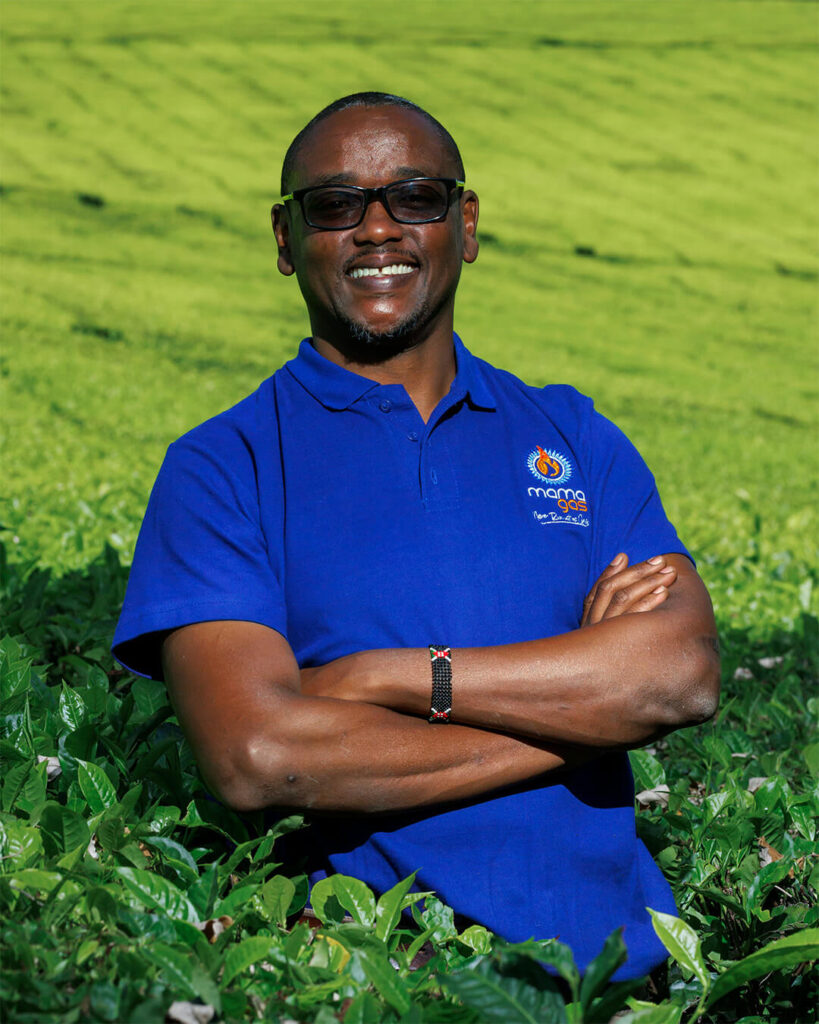
Ben Rono, MamaGas
One of our partners, Ben, is from the same tea-producing regions of Kenya as Lina and is working to expand his company, MamaGas, into Kericho and the surrounding tea factories. Our loans have allowed him to purchase and place an additional 1,000 units in the region and to offer payment plans to residents, lessening the upfront cost burden on low-income families.
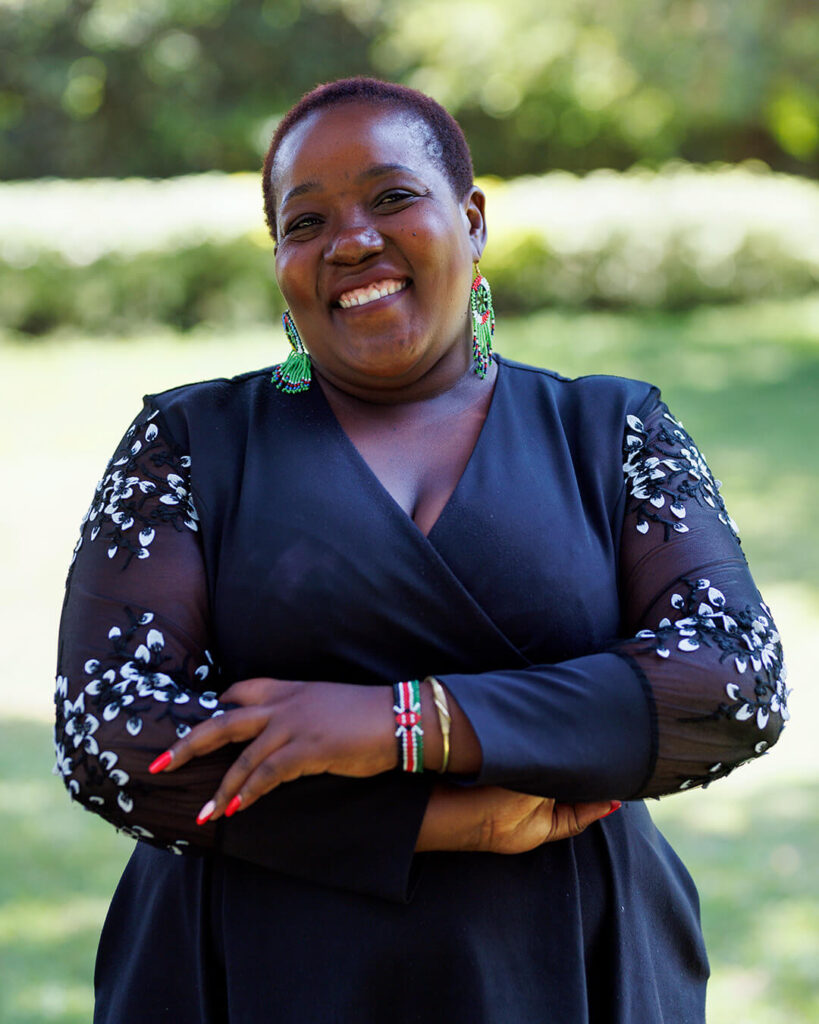
Hildah Ombasa, Kisac Enterprises
Another one of our Kenyan partners, Kisac Enterprises, began as a soapstone business. After recognizing the health benefits of switching its employees to propane cooking, it entered the propane business and expanded access to it in its region. They have also begun to offer repayment plans similar to MamaGas.
The Bettering Human Lives Foundation has given out $1.3 million in loans to 13 companies across Ghana, Kenya, and Zambia. These businesses are growing and sustaining themselves in difficult business environments while simultaneously affecting social change in their local communities.
Energy is foundational to modern life, and we see the adoption of propane for cooking as the first step a family can take toward energy abundance and a better quality of life. We encourage this progress in a way that says we don’t need handouts or new technology, and by working with local entrepreneurs, we can successfully and sustainably get more propane into the homes of people across the globe, and in doing so, better human lives.